Rumpelstiltskin – A Fairytale for Modern Times
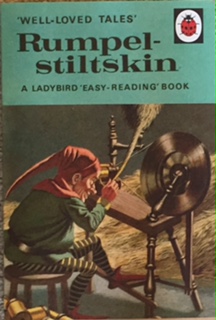
Rumpelstiltskin

Once upon a time, there was a parent who had a daughter in year six.

One day the King sent for the parent, but when the parent stood before the King, she became frightened and blurted out the first thing that came into her head, “My daughter is so clever, she can pass whatever assessment is put in front of her, she doesn’t need to know the full syllabus and she even knows what a relative clause is.”

“Your daughter is indeed clever, if she can do as you say,” answered the King. “Let’s make all children across the land, prove they are as clever as her”

The next day, the King ordered all year six children to come to the Palace, were he lead them into a room filled only with desks, chairs, assessment papers and pens.

“Now get to work,” the King shouted. “Anyone who doesn’t pass this test, will have to stay in year six until they do”

As he said these words, the King left the room and locked the door. Most of the children, sat down on a chair and began to cry, they did not know what to do and they had no idea what a relative clause was.

After a few minutes, the door opened and a  magician  appeared, “why are all you children crying?” he asked. “We don’t know what to do,” wailed the children together, “we have to take this test or we will remain in year six for forever.”

“I do know what to do” said the magician, but I will need something in return. “You can take our mobile phones” said the children.

The magician said some unusual words that the children did not recognise, and magically their assessment papers were completed, with handwriting which was unique to every child.

“Now the King will think you are all as clever as each other,” said the magician as he disappeared in a cloud of smoke.

When the King returned later to see how the children were getting on, he could not believe that all the children had completed the assessment. He called the ‘Royal Marker’ who had to stay up all night making sure all the assessment papers were correct.

In the morning, the Royal Marker, informed the King that all the children had completed the assessment papers correctly. “They are indeed clever children,” thought the King, “I need to test them again, with some more difficult assessments, I wonder if they know what contracted forms, modal verbs and subordinate clauses are?”

When the King arrived to speak to the children, they thought they would be going home, but the King lead them to another room, where two assessment papers were waiting on individual desks for them.

The King once again, told the children they had to take the assessment and pass or they would stay in year six, and then he locked the door.

As had happened the day before, as soon as the King had gone, the magician who had helped the children appeared. “I can help you again,” he said, “but this time you must give me your gaming passwords” Again the children agreed and the magician said some unusual words and their assessment papers were completed.

Over several days the King kept making the assessment papers more difficult and  the children with the help of the magician managed to trick the King into thinking they could answer them all.

On the fifth day, the King promised that if the children could complete all ten assessment papers, this would be their passport to either an Oxbridge or a Russell Group University, as it showed that they were all clever. The children did not know what this meant, it was nearly as stange as the magician who was helping them pass the assessments, so they agreed.

And this is where my modern fairytale has to stop as it cannot keep up with the story of Rumpelstiltskin.

In the tale told in  Ladybird’s well loved tales, a miller’s daughter is asked to spin straw into gold, and when she is successful with the help of a character called Rumpelstiltskin, she has a happily ever and marries a King. The story does take another nasty turn, but the Queen triumphs in the end.

Unfortunately in this modern tale, there is no happily ever, our year six children have just taken a range of tests which if they do not ‘pass’ will have to repeat again at secondary school and there is no opportunity for triumph.

The reward is not bags of gold, or marrying a King, like in the traditional fairy tales, but resits  and taking more tests and assessments until children are ‘deemed clever enough’ to meet a national standard which appears to have been set with no consideration of even a simple distribution curve.

We do not know what the impact of this will be on a whole generation of children but I know many children at eleven and beyond, who do not know what the active voice is or what a subordinating conjunction, nor do they ever need to know.

I know for example, that at 16, my nephew would not be able to able to take the current year 6 assessments and score anything at all, he is still practising writing his name.

We have not got a Rumpelstiltskin to spin straw into gold for us, or a magician to help children pass unrealistic assessments so let’s stop this now, so we can change the ending to a happy one.


Tiramisu – Key Ingredients for NQTs

As an NQT, I learnt my craft, with a year two class in Stepney in the East End of London. There were a number of non readers, pupils who had newly arrived from Bangladesh with little or no spoken English and several pupils with Statements of SEN (now EHCP).

For those of you who know me personally, read my blogs or have listened to me present, you may have heard me say that applying to work in Tower Hamlets as a NQT, was one of the best decisions I ever made. The impact of this teaching experience on my career is unmeasurable and unquantifiable, and without doubt has enabled me to be the educationalist I am today.

I had completed my teaching training in Nottingham, and what a difference over a hundred miles makes. I moved to London to experience the ‘bright lights’ of city living, and having secured my teaching position, I had the opportunity to live in a Housing Association property in Bow, which wasn’t really what I had in mind, but it was cheap and there was a DLR station close by ( I would be giving my age away, if I said, it only ran on week days, and was replaced by a bus at the weekend)

When I took ownership of my classroom for the first time, it was like being asked to produce a Tiramisu in the technical challenge of the Bake off. I know what a Tiramisu looks like. I know what it tastes like. I have an idea of what some of the ingredients are. I could probably make some of the component parts.

For example, I know the measurements required for the construction of a  sponge cake, and it is all about the ratios of butter, sugar, flour and eggs, so could get so far, but then I would need to turn back to the recipe book for the oven setting and length of time it should be baked for. As this always takes time, energy and forward planning, and domestic tasks are not a strength of mine, if I want a sponge cake, I would most likely visit Waitrose, M&S or Tesco, and almost certainly if I wanted a Tiramisu I would buy one ( I have attempted a Tiramisu, once, and it was not that successful!)

As a NQT in a school, depending on the current training route undertaken, some of the key components for making a traditional Tiramisu may be missing, especially when supporting pupils who may be experiencing difficulties. As there is a language to cake baking, there is the creamed method, the folding method, the kneading method, there is a language for SEND; ASD, SALT, Multisensory teaching, EHCP etc.

During the technical challenge of the BakeOff, the bakers are given limited instructions and expected to understand caramelize, flute and fold. Consequently new teachers have their own technical challenge when they are given a class list and/or a provision map. Both of which could contain a range of terms, which could be unfamiliar if they have only been taught to make the equivalent of a Tiramisu and not the Jamie Oliver version with ‘bashed up coffee beans’ or one with a honeycomb topping.

For me, when assembling my ingredients for my first class, I had a superb mentor, who met with me regularly and helped me to plan for the different needs in my classroom, but also I needed to work closely with the school SENCO. She had the skills to be able to make the different versions of Tiramisu which were needed and she and was able to guide an NQT to master the original recipe. She was able to provide support on annual reviews, parental meetings, individual target setting, managing provision, supporting teaching assistants and general advice & guidance.

After my first year I knew I wanted to be like the SENCO. She was an inspiration and one of life’s angels. She was tireless and relentless in her support for pupils with SEND, as well as families living in challenging circumstances,  she could support families to find refuge, she could keep families together by finding respite opportunities,  and she would provide clothing for pupils who needed it, as well as  providing a breakfast club so pupils did not start the day hungry. She understood the need for ‘pupil premium’, well before it was a term used by the DFE.

Since my NQT year, SEND leadership has changed. There is no longer an expectation that one person alone in the school, knows everything about SEND, Inclusion, Safeguarding and Child Protection and that they should also know how to teach all children with a range of identified SEND difficulties.

For a current NQT, a package of support can be developed whereby a SENCO leads a programme to support an NQT to join the community of all teachers who are teachers of SEND. This would include talking to all teachers in the school about individual target setting, managing provision and teaching assistants, as well as visits a range of specialist centres of provision, such as Special Schools and PRUs.

I attended the The Key state of Education presentation last week, and a member of the audience said that of the NQTs joining the profession this year, 1/8 will go on to become Senior leaders in Schools. When I was an NQT, I did not anticipate that I would become a senior leader  who is able to lead SEND policy and practice, and mentor future senior leaders, but as my experiences  have enabled me to do so, I hope that I can continue to support all levels of the profession, by providing the correct ingredients for the task and if you ever want to share cake with me, let me know… I do like Tiramisu!